
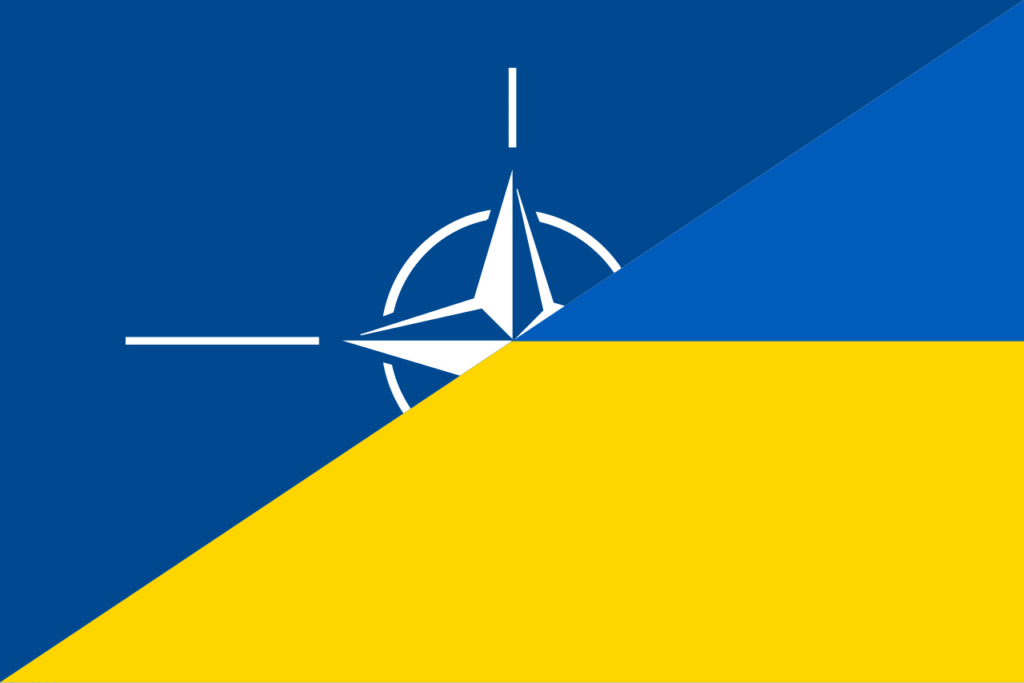
Ukraine’s war of survival has become not just a national resistance effort, but a full-spectrum transformation of its defense establishment. At the heart of this transformation is Ukraine’s defense industrial base—once a largely Soviet-inherited relic, now undergoing one of the most ambitious overhauls in modern wartime history. This metamorphosis is about more than battlefield tactics. It is about permanently shifting Ukraine’s defense production ecosystem away from outdated, centralized, post-Soviet structures and aligning with NATO’s decentralized, high-tech, and export-ready model. As the war grinds on, Ukraine is not merely consuming Western weapons—it is learning to make them, innovate with them, and eventually supply them.
Historically, Ukraine inherited one of the largest defense industrial complexes in the former Soviet Union, second only to Russia. Major facilities like the Antonov Design Bureau (aircraft), Kharkiv Morozov Machine Building Design Bureau (armored vehicles), and Yuzhmash (missiles) represented the Soviet empire’s industrial depth (Ukroboronprom). However, post-independence corruption, underinvestment, and lack of coherent strategy left this once-potent capability atrophied. In 2014, Russia’s illegal annexation of Crimea and the start of the Donbas war marked the beginning of a slow but necessary reorientation of Ukrainian defense priorities. The full-scale invasion in 2022 accelerated this beyond anything seen before. Ukraine is now in the midst of transforming its fragmented, vulnerable industrial system into a modular, NATO-interoperable machine capable of sustaining prolonged conflict—and potentially contributing to Europe’s collective defense in the future.
The state-owned conglomerate Ukroboronprom has been at the epicenter of these reforms. Once a symbol of Soviet-era inefficiency and opacity, Ukroboronprom is now being restructured into a joint-stock company called Ukrainian Defense Industry JSC. This transformation is modeled on Western defense giants like Rheinmetall and BAE Systems, with goals of transparent procurement, joint production, and export licensing (Ukrainian Defense Industry). Importantly, this shift is also an anti-corruption effort, intended to attract foreign investment and enable deeper partnerships with Western defense firms.
One of the major successes in this direction is Ukraine’s partnership with European defense contractors. Rheinmetall has signed agreements to produce armored vehicles, including the KF51 Panther, in Ukraine itself. The German firm has also announced plans to co-develop maintenance and production facilities with local partners (Reuters). Similarly, France’s Thales and Sweden’s Saab have expressed interest in long-term defense industrial collaboration, recognizing Ukraine as a strategic node for European defense production.
Ukrainian firms are also rapidly developing indigenous capabilities that once seemed impossible under wartime conditions. Notably, Ukraine’s defense tech sector has produced a growing arsenal of UAVs, loitering munitions, and battlefield ISR tools. Domestic startups like AeroDrone, Ukrspecsystems, and Brave1—a government-backed defense tech accelerator—have emerged as key players in the innovation ecosystem (Brave1). These companies are working not only with the military, but also with international partners to meet urgent battlefield demands. This decentralized innovation strategy mimics the dual-use technology approach seen in NATO militaries, where private-sector breakthroughs are quickly adopted into military platforms.
In terms of heavy weapons, Ukraine has made surprising advances. The production of mortars, howitzers, and even artillery shells has been quietly scaling up, thanks in part to foreign technology transfer and security assistance. The Czech Republic and Poland have been instrumental in this regard, helping Ukraine retool older Warsaw Pact-era factories and shift them toward NATO-standard munitions (European Defence Agency). Notably, Ukraine is also setting up domestic production lines for 155mm artillery rounds, the NATO standard, thus reducing dependency on foreign supply chains. These moves are crucial given the scale and pace of artillery use in the current conflict, where Western stockpiles are under constant strain.
Ukraine’s defense industrial revival is also deeply intertwined with its path toward NATO accession. While formal membership remains politically sensitive and distant, interoperability is already advancing rapidly. Ukrainian military units are being trained to NATO standards, and procurement is increasingly aligned with Alliance systems. This harmonization enables Ukraine to more seamlessly integrate with NATO militaries during joint operations and allows smoother absorption of Western military aid. For example, NATO’s Defence Innovation Accelerator for the North Atlantic (DIANA) has included Ukrainian startups and innovators in its programs, effectively folding Ukraine into NATO’s high-tech defense orbit (NATO DIANA).
Additionally, Ukraine’s legal and institutional frameworks are being overhauled to enable foreign direct investment and streamline military R&D. The government has simplified procurement processes, passed reforms for intellectual property protection, and launched digital platforms to track defense spending—part of a broader anti-corruption campaign aimed at increasing trust with international partners (Transparency International Ukraine). These reforms are essential for attracting private sector investment and transitioning from a wartime aid model to a self-sustaining, export-capable industry.
One of the most promising signs of transformation is the emphasis on dual-use and commercial innovation. Ukraine’s success in repurposing civilian drones for military operations, combined with the rapid growth of AI-based targeting and reconnaissance tools, indicates a modern, agile mindset. This approach mirrors that of Israel, the U.S., and Estonia—where civilian tech firms feed directly into defense needs. Ukraine’s ability to iterate and deploy new technologies quickly, even under active bombardment, is a testament to its adaptive industrial strategy.
Of course, challenges remain. Russian missile and drone strikes continue to target critical infrastructure, including factories, power grids, and railways essential for production. Cyberattacks and disinformation campaigns aim to disrupt supply chains and sabotage morale. Ukraine’s defense sector also faces workforce shortages, supply chain gaps, and financial constraints. However, its resilience under fire is precisely what is attracting Western interest. Defense partnerships with Ukraine are increasingly seen not as acts of charity, but as strategic investments in a country that has demonstrated operational excellence and innovation under the harshest conditions.
In the broader geopolitical context, Ukraine’s emergence as a defense production hub is a counterweight to Russia’s traditional arms-export dominance. With Russia increasingly isolated and under sanctions, Ukraine—if supported—could become a key player in supplying not only its own military, but also other democracies seeking cost-effective, battlefield-tested systems. This has implications for the future of the European Defense Industrial Base, which the EU is actively seeking to expand and diversify in response to the war (European Commission).
Furthermore, Ukraine’s defense industrial rise is also altering regional defense cooperation. The Lublin Triangle (Ukraine, Poland, Lithuania) and trilateral partnerships with the UK and Baltic states are not only military in nature but increasingly industrial. Joint R&D labs, munitions plants, and training centers are being planned to establish Eastern Europe as a serious node in transatlantic defense manufacturing (Atlantic Council).
Ukraine’s defense industrial awakening is one of the most compelling and underreported aspects of its wartime transformation. From a hollowed-out Soviet-era system to a digitally-savvy, NATO-compatible, and innovation-driven sector, Ukraine is demonstrating how war can catalyze not only military reform but also strategic industrial realignment. This transformation is far from complete, and it requires continued Western support—not just in the form of aid, but in technology transfer, joint ventures, and long-term investment. If sustained, Ukraine will not only defend its sovereignty but help reshape the defense landscape of Europe itself.